Nonclinical Laboratory Study vs. GLP Compliant Study. What’s the difference?
Greg Furrow
Mustang Bio, Inc.
Published in Volume 35.6 of Quality Matters
Technical Paper, 2019-4
Download PDF of this article
Hamlet, Act 3, Scene 1. Hamlet is talking aloud to himself:
To be or not to be, that is the question. Hamlet’s is a binary choice. It’s pretty simple to understand. However, I think he was being philosophical about the choice and not really making a decision.
To GLP or not to GLP is a different question, but just as full of philosophical dialogue as Hamlet’s. Some of us are so nerdy we thoroughly relish a good “GLP or not” discussion as one of the highlights of our week. Much of the time, we don’t make a decision either. Sometimes our options just don’t seem binary enough to make one option clearly the right choice.
At the 35th SQA Annual Meeting I organized a round table discussion titled: “Nonclinical Laboratory Study vs. GLP compliant study. What’s the difference?” My goal was to make the “GLP or not” discussion as boring as it should be. My goal here is to revisit the discussion from that session and to add commentary based on feedback from the attendees.
What is the Question?
From my perspective the starting point is always: Is GLP compliance required, or not? This is always a binary decision and there is always a yes or no answer. What makes this a yes or no question is the definition of a nonclinical laboratory study:
21 CFR part 58.3(d) "Nonclinical laboratory study “means in vivo or in vitro experiments in which test articles are studied prospectively in test systems under laboratory conditions to determine their safety. The term does not include studies utilizing human subjects or clinical studies or field trials in animals. The term does not include basic exploratory studies carried out to determine whether a test article has any potential utility or to determine physical or chemical characteristics of a test article.”
So, let’s make the question easier to answer by modifying it from “is GLP required or not” to “is my study a nonclinical laboratory study or not?” If a study meets the definition of a nonclinical laboratory study, then it is required to comply with the GLP regulations.
EPA segue: EPA doesn’t have a definition for nonclinical laboratory study. The TSCA (40 CFR part 792) and FIFRA (40 CFR part 160) GLPs define study as:
TSCA: “Study means any experiment at one or more test sites, in which a test substance is studied in a test system under laboratory conditions or in the environment to determine or help predict its effects, metabolism, environmental and chemical fate, persistence, or other characteristics in humans, other living organisms, or media. The term “study” does not include basic exploratory studies carried out to determine whether a test substance or a test method has any potential utility.”
FIFRA: “Study means any experiment at one of more test sites, in which a test substance is studied in a test system under laboratory conditions or in the environment to determine or help predict its effects, metabolism, product performance (efficacy studies only as required by 40 CFR 158.400 or 161.640, as applicable), environmental and chemical fate, persistence and residue, or other characteristics in humans, other living organisms, or media. The term “study” does not include basic exploratory studies carried out to determine whether a test substance or a test method has any potential utility.”
I won’t spend much more time specifically on EPA GLP studies. But the principle is the same. Studies which meet these definitions are required to be run in compliance with the applicable GLP regulations. One very notable difference between EPA and FDA is test article characterization is considered a stand alone GLP study in both EPA GLP regulations. Test article characterization is not a nonclinical laboratory study by FDA definition. FDA considers test article characterization to be part of a nonclinical laboratory study.
Yes, the study meets the definition of a nonclinical laboratory study.
I’m going to be a little obtuse here, so bear with me. If a study meets the definition of a nonclinical laboratory study, then the whole study must be compliant with the GLP regulations. All the data associated with the study are required to be GLP compliant. All the phases are required to be GLP compliant. All the people who participate in the study are required to be trained in the GLPs, yes, even the people who audit test article characterization. Another absolute statement: If it’s part of a nonclinical laboratory study, it is required to be GLP compliant. Easy peasy lemon squeezy.
OK, so sometimes we want to include a phase we can’t do in compliance with GLPs. This creates a dilemma for some. There isn’t a GLP compliant option. By definition, the decision to run a phase of a nonclinical laboratory study in a non-GLP compliant way is noncompliant. Not just non-GLP, but noncompliant because non-GLP means noncompliant. Accept this as a fact: If you will have such a non-GLP phase in your nonclinical laboratory study, you will have a noncompliant phase in your nonclinical laboratory study. (I’m feeling a little like Yogi Berra or Captain Obvious) The study director will have to assure adequate oversight of the phase. Additional quality assurance (QA) or quality control (QC) may be required. At a minimum there is a GLP deviation and the study director will have to assess the impact on the study. Even with all the steps taken to assure the quality of the non-GLP phase, it is still not compliant. However, it might be tolerably noncompliant if the study director determines the GLP deviation does not adversely affect the integrity of the study or interfere with the study objective.
What is it that makes a particular phase non-GLP? This is clearly not a binary question. There can be everything from “nothing about the phase meets any GLP requirements” to “it’s all GLP except for one element, such as, the method used was approved by GMP QC instead of Test Facility Management (TFM)”. All non-GLP phases are not created equal. Acknowledge the elements that are GLP compliant and create procedural controls for the elements that aren’t. It’s still not compliant.
Obtuse again: Nothing can make a non-GLP phase into a compliant phase. Make the quality as high as possible and be transparent with the non-compliance.
A common misunderstanding is a noncompliant phase of a nonclinical laboratory study is acceptable. Non-compliance is not an option on the menu. Choosing to be noncompliant should be an exception borne of necessity, not of convenience or cost. I sometimes hear people refer to non-GLP phases as “exemptions”. There are no exemptions. Stating in the protocol that a phase will not be compliant does not make the phase exempt from compliance.
Obtuse again: Deciding to include a non-GLP phase in a nonclinical laboratory study and explaining the decision in the protocol does not exempt that noncompliant phase from any GLP requirement. It should highlight the potential that more oversight by the study director and QA may be necessary.
Some of you may be thinking: “but that’s not the way it is.” or, “our sponsor won’t like that”, or “lots of companies don’t treat non-GLP that way.” Yes, I know. I have had that conversation with several dozen of you. Non-GLP phases have been a part of my life for decades. I am aware of how many companies treat non-GLP phases. Many companies believe their approach to non-GLP studies is a standard industry approach, but there is no such thing as “an acknowledged standard industry approach”. Just because another company (or two or three or four…) does something in a particular way does not make it acceptable or compliant.
It is a fact that performing a phase of nonclinical laboratory study in a non-GLP way is not compliant. I would prefer we stop referring to these phases as “non-GLP” and instead refer to them as “noncompliant”. There is no guidance on “how to include noncompliant phases in your GLP study” by FDA. I suspect what has happened is over time, we have tried to make non-GLP phases acceptable because we have no choice sometimes. Unfortunately, there are instances where GLP compliance was possible, but non-GLP was chosen for a business reason. This may have become “normal”, but it is and has always been noncompliant. There is not an acceptable explanation for choosing noncompliant when compliant is possible.
Secret conversation behind closed conference room doors: It’s tough, I know, to hold to the requirement that all parts of a nonclinical laboratory study are required to be GLP compliant. I know it’s tough when your firm or a sponsor’s firm treats non-GLP phases like they are exempted or excused from compliance. My gut feel is the reason we keep talking about this is our companies want non-GLP phases to be compliant or acceptable. Non-GLP phases with excellent quality (approved SOPs, adequate qualified people, QA/QC oversight, good documentation practices, validated methods, validated computerized systems, documented deviations, adequate equipment, etc.) may be acceptable, but will, by definition, never be GLP compliant. We must accept the fact that if we are going to do part of a nonclinical laboratory study non-GLP, it will not be compliant.
Obtuse again: Non-GLP = not compliant. No ifs, ands, or buts.
Animal Rule Studies
Before I move to “no, my study does not meet the definition of a nonclinical laboratory study”, I want to address the one area I consider middle ground: Animal Rule Studies. I’m being generous here because there is a regulatory gap. Animal rule studies are studies where clinical trials in human subjects would not be ethical or feasible. So, animal models are used instead of human subjects. These studies do not meet the definition of nonclinical laboratory studies and by regulation are not required to be run in compliance with the GLPs. They should be regulated studies, but a regulation has not been written to address the good laboratory practices for animal rule studies. The closest regulatory fit is the GLPs and FDA has advised that animal rule studies should be run in compliance with GLP regulations to the extent practicable. That doesn’t mean “choose what you think is applicable”, it means if it can be applicable, it is. Run animal rule studies just like nonclinical laboratory studies, including writing deviations for non-GLP elements.
No, my study does not meet the definition of a nonclinical laboratory study
Skip to the end if you want. GLP compliance is not required. The requirements are that simple. The GLPs are for nonclinical laboratory studies. Applying the GLP requirements to anything else is self-inflicted.
Self-inflicted may seem provocative. That’s why I use it.
The study director indeterminacy
One of the most discussion generating statements, which I’ve learned surprises many people, is if it is not a nonclinical laboratory study, it should not have a study director. The definition of study director in 21 CFR part 58.3 (m): Study director means the individual responsible for the overall conduct of a nonclinical laboratory study. I’ve spent hours explaining this and I could write on and on about it but I will try to be concise here. The role of the study director was defined as such to assure there will be a single point of control for nonclinical laboratory studies. All of the audits and all of the deviations associated with a nonclinical laboratory study must go to the study director. If for example, a study director is named for a method validation, audits and deviations would go to that study director, and may never get to the study director who uses the method on their study. Furthermore, if a study director includes individual scientist reports authored by other study directors in the nonclinical laboratory final report, there will be more than one study director in the final report. A fundamental rule almost everyone understands is there may only be one study director on a nonclinical laboratory study.
In the past I’ve been asked: “So, I should NOT have a study director for studies that are not nonclinical laboratory studies or for non-GLP studies?” Yes, that’s what I’m saying. The follow up question is “OK then, what should I call the role?” This is not defined so you may title the role anything that makes sense: Scientist, lab manager, supervisor, supervising scientist, analytical chemist, biologist, lead biologist, etc… Study director is a defined role: Responsible for the overall conduct of a nonclinical laboratory study.
I’ve had this conversation multiple times: “In order to claim GLP compliance, Management and/or our sponsor require we assign a study director.” OK. I’ll try to equip you for those conversations, but now it moves to soft skills. As QA, we’re in the position of explaining to management and staff where they are not compliant with GLPs, SOPs or the protocol. This is another one of those times. Another fundamental GLP regulation is Test Facility Management is responsible for facility compliance. The QAU is not responsible for compliance. Our job is to advise and strive for understanding. Sometimes management will make a decision, potentially because they believe they understand the regulations better than QA. (Since Test Facility Management is responsible for compliance, they SHOULD understand the regulations better than the QAU.) Document the explanation you provided and move on as you would with any other audit response.
Some people have asked me: “how can it be GLP compliant without a study director?” Here’s an example of an activity most of us have in our facilities where work is performed in compliance with the GLPs and a study director is not required. There are several elements of facility maintenance that are required in order to perform GLP compliant nonclinical laboratory studies. I’m going to highlight HVAC maintenance, especially filter changes. In a facility complying with the GLPs, there would be an SOP approved by management describing the process for changing filters and documenting the change. The people performing the activity would be required to have job descriptions, CVs and training records documenting they are qualified to perform the task and trained in the GLP regulations. QA would not be required to inspect every filter change, but HVAC maintenance would probably be covered in periodic facility or process inspections. HVAC filter changes can be performed in compliance with the GLPs and a study director is not required for HVAC filter changing. (Or refrigerator maintenance, or glassware washing, or filing training records and CVs, or maintaining a signature log, or shipping and receiving, or managing the archive, etc…)
In a similar note, there are nonclinical laboratory studies that do not have animals. Test system can be plants, microorganisms, or subparts thereof. If a facility only runs nonclinical laboratory studies which have no animals, these studies would be GLP compliant even if the facility has no SOP for the housing, feeding, handling and care of animals as required in 21 CFR part 58.90. This SOP requirement does not apply if the facility has no animals. My purpose in writing this paragraph is to point out that it is not possible to include every section of the GLP regulations in every facility or study. I hope you can make the connection to the idea that a study director does not apply when the study or activity is not a nonclinical laboratory study.
I’ll close this discussion with a few statements I hope will answer some of the questions you are thinking.
- Study director is defined as the individual responsible for the overall conduct of a nonclinical laboratory study.
- If the study is a nonclinical laboratory study, a study director is required in order to be GLP compliant. (Remember the study director is responsible for 100% of the execution of the nonclinical laboratory study protocol.)
- If the study is not a nonclinical laboratory study, but is performed in compliance with the GLP regulations, a study director is not required in order to be GLP compliant.
- A study director is not required for an activity that is not part of a nonclinical laboratory study to be GLP compliant.
- Computerized system validation can be performed in compliance with the GLP regulations without a study director.
- Method validation can be performed in compliance with the GLP regulations without a study director.
- As with 5 and 6 above, Facility maintenance and administrative activities that are not part of a nonclinical laboratory study can be performed in compliance with the GLP regulations without a study director.
- GLP compliance ≠ study director required
EPA segue: The EPA definition of study director is: “Study director means the individual responsible for the overall conduct of a study” (same for FIFRA and TSCA). Study is defined in both regulations, so the decision point is the same. If a study meets the regulatory definition of a study, then a study director is required.
Quality or Compliance, is THAT the question?
In practice I know it’s not as easy.as “the GLPs don’t apply so skip to the bottom.” In my humble opinion, the GLPs are a very good source of structure which has the potential to help communicate a level of quality being applied to an activity. All the elements we know and love about the GLPs could add value to almost any study. Elements such as qualified people, good documentation practices, SOPs approved by management, adequate resources, a study protocol (Another term for protocol such as ‘experimental plan ‘could be used since it is not a nonclinical laboratory study.), adequate equipment, Quality assurance, etc… In order to have some level of confidence in a study, some of our companies have instructed us to run those “not a nonclinical laboratory studies” in a GLP compliant way.
Here’s a secret: we can apply the GLPs to anything we want. I am in favor of that and I’m a fan of that recommendation. However, we don’t have to claim GLP compliance when we do that. You can have a fully GLP compliant “not a nonclinical laboratory study” and not claim GLP compliance. It could be a very high quality study without claiming GLP compliance. One US University refers to this as “conducting a study under a quality system using the GLPs as a reference standard.” Referring back to Shakespeare, as long as it’s not a nonclinical laboratory study, GLP by any other name would smell as sweet.
GLP compliance is a compliance designation, not a value or quality designation. In my presentation at the SQA Annual Meeting I showed these pictures of an $8,000.00 violin bow and a $30.00 violin bow:
Can you tell which is which? They LOOK similar (to me).
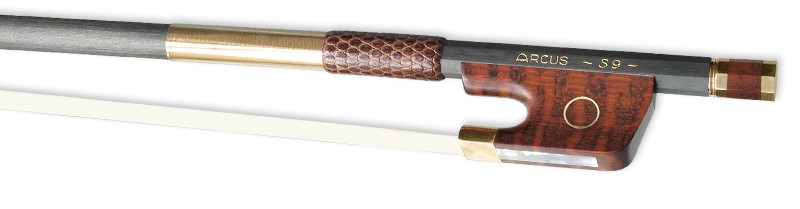
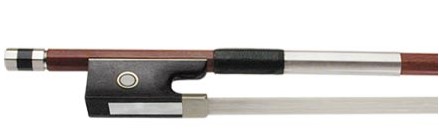
How about a bow that sold for $288,960?
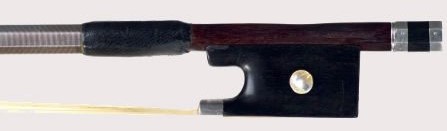
In the hands of a violin player they all work. Claiming compliance with a specification or standard isn’t what makes one worth $7,970 more and another worth $288,930.00 more. In my home state of Massachusetts, a 1982 Ford Fiesta and a 2019 Porsche 911 both must pass a safety inspection to be licensed. I hope you’re following my analogy. Both cars could pass inspection (be “GLP compliant”). That’s not what makes the Porsche worth more. The Fiesta will never be a 911, nor will it ever fool anyone, no matter how compliant it is.
GLP compliance should be basic and easy. If something is worth doing, it’s worth doing right and using GLP procedures to execute any study is a good thing. I encourage it everywhere. Have an SOP where your facility states that all work will be done in compliance with your facility’s GLP SOPs. Put that as a cover to all your SOP binders or electronic SOP landing pages: “Everything we do is performed according to these SOPs”. Then everything is GLP compliant, even if there is not a GLP compliance claim.
In some firms, the only difference between GLP and non-GLP is QA does not audit non-GLP. QA is required to inspect every nonclinical laboratory study. QA is not required if it is not a nonclinical laboratory study. It’s important to revisit the discussion of non-GLP phases of a nonclinical laboratory study. Remember, non-GLP phases of a nonclinical laboratory study are required by regulation to be GLP compliant. It would be inappropriate to exclude QA from inspecting a non-GLP phase of a nonclinical laboratory study.
For Animal rule studies, the Quality Assurance Unit is expected to function like a GLP compliant Quality Assurance Unit. Similar to the comment above, it would be inappropriate to exclude QA from inspecting animal rule studies at intervals adequate to assure the integrity of these studies.
I can almost hear you saying “that won’t work”, “our sponsors make us do method validation GLP”, “my management won’t go for that.”, etc. Alrighty then, so you’re going to claim GLP compliance on something that is not a nonclinical laboratory study. I support that too. It’s also a good idea, but recognize, it is self-inflicted, or inflicted by your sponsor. (And, by the way, it is not acceptable in some European countries, but I’m focusing on FDA for this article.)
Once you make a GLP compliance claim, all the GLP requirements apply. If one of the phases is not GLP compliant, it is a GLP deviation, because it’s part of a GLP study. Another important point is if you claim GLP compliance, all the applicable GLP requirements apply. As with the animal rule studies, if it is possible to apply a GLP requirement, then the requirement applies. No requirement is excluded. If requirements are excluded, then the GLPs are not being followed. If a GLP requirement is not applicable, such as for method validation you may not need any of the requirements pertaining to animals, then it’s not excluded from compliance, it just doesn’t apply. (At risk of being repetitive, I’ll emphasize again: since it’s not a nonclinical laboratory study, the role of study director also does not apply.) If you’re going to claim GLP compliance, be GLP compliant.
My bottom line recommendation for “not a nonclinical laboratory study” is “do good work”. Always create the highest quality product possible. Keep a high quality standard on everything your firm does. Stand for excellence. I accept some firms may want to loosen requirements for some work and create a lower quality, less expensive product. That’s a management decision. There are also firms who have taken a stand that they only operate under one level of quality.
Enter the discussion from the Annual Meeting roundtable groups
I’ve addressed some of the feedback from the SQA Annual Meeting discussion above. The following are some comments and questions from the round table discussions I want to address as well. Comments from the round table groups are in quotes. For the most part my comments are indented under those:
- “We discussed the use of the study director term for nonclinical laboratory studies only. We believe it is an acceptable business decision to use the study director title and role on other studies if it is defined in an SOP.”
- Writing non-compliance into an SOP does not make it compliant. As discussed above, the definition of study director is 21 CFR part 58.3 (m): “Study director means the individual responsible for the overall conduct of a nonclinical laboratory study.” The regulations require all QA audits and deviations go to the study director and there may only be one study director for a study. Test Facility Management is responsible for compliance.
- “The term GLP is used to communicate something is a high value study [with trustworthy data quality and integrity]. Test facility management wants to claim GLP compliance on all studies, not just nonclinical laboratory studies, but in fact, everything isn’t GLP compliant. QA provides feedback but test facility management makes the final decision. QA doesn’t have the clout to change that.”
- It’s a tough position to be in when QA provides feedback and test facility management does something contrary. My approach is to use the facts: regulations, guidance and preambles. My style is to strive for understanding and avoid having a “right or wrong” discussion with test facility management.
- “How do we assure a good quality study if not a GLP study?”
- How do you assure a good quality study if it is a GLP study? However you confirm the quality of a study, do that.
- “What if the Sponsor wants to add QA late and QA only audits the final report (do not see data). How do we phrase the QA statement?”
-
This must be a “not a nonclinical laboratory study”, otherwise QA would be involved from the beginning.
- I don’t see much value added by having QA audit a report with no data.
- For a nonclinical laboratory study, 21 CFR part 58.35 (b) (6) QA must review the final report to assure such report accurately describes the methods and standard operating procedures, and that the reported results accurately reflect raw data of the nonclinical laboratory study. In this instance, since QA did not review data, QA cannot confirm the reported results reflect the data.
- How do you phrase the QA statement? Keep it simple: State what QA audited: report only, no data, the date the audit/inspection was performed and the date the audit was reported to management and responsible individual scientist (there would be no study director since this was not a nonclinical laboratory study.)
- “We have a sponsor summarizing the statistics from two separate GLP studies and reporting the summary in a third GLP study.”
-
The protocol for all three studies must include a statement of the proposed statistical methods to be used.
- If data from the first two studies are reanalyzed for the third study, this must be stated in the protocol for the first two studies.
- Summarizing reported results only (no data) from the first two GLP studies would not be required to be defined in the protocols for the first two studies.
- This is a good example of why I recommend setting a high standard for quality and deliver a high quality product that exceeds what can be communicated by stating the product is “GLP compliant.” In this case, GLP compliant has very little meaning.
- One group communicated their firms applied one standard universally. From the group:
-
“The quality mindset starts at the top with management.”
- “Be sure to question the Sponsor to find out if the phase being delegated is part of a nonclinical laboratory study and will be submitted.”
- “If non-GLP means poor documentation and the study cannot be reproduced, the value of performing the study is questionable.”
- “We understand method validation is not considered a nonclinical laboratory study, but:”
-
“Why does the FDA expect QA involvement?”
- The GLP regulations do not require QA involvement for method validation unless it is done as a phase of a nonclinical laboratory study. If a firm claims GLP compliance for this activity, then QA is required.
- For clarity, if the validation of an analytical method is included in the nonclinical laboratory study protocol, then by definition it is required to be GLP compliant. This is self-inflicted because the validation of an analytical method is not required to be part of a nonclinical laboratory study protocol.
- “Why do the FDA [GLP] regulations apply?”
- Method validation is not a nonclinical laboratory study.
- From the 1981 GLP Questions and Answers (https://www.fda.gov/inspections-compliance-enforcement-and-criminal-investigations/nonclinical-laboratories-inspected-under-good-laboratory-practices/1981-questions-answers-good-laboratory-practice-regulations):
-
Do the GLPs apply to validation trials conducted to confirm the analytical methods used to determine the concentration of test article in animal tissues and drug dosage forms?
[FDA answer] No.
However, the validation may be for a method which will be used to support a nonclinical laboratory study. There should be SOPs approved by management, the people performing the activity should have job descriptions, CVs and training records documenting they are qualified to perform the validation activities and are trained in the GLP regulations. The validation should be well documented and reported and may be audited by an FDA Investigator, but is not required to claim GLP compliance.
- “Who decides what the applicable GLP regulations are for an animal rule study and should QA be required?”
-
If it is possible to apply a GLP regulation to the animal rule study it is applicable and must be followed. The only decision should be: can this regulation be applied based on study design including considerations such as studies conducted in a biocontainment lab? If yes, it is applicable.
-
Answering the question: Can the QA regulations be applied to this study? QA can be involved in any study. So yes, the regulations regarding QA are applicable to an animal rule study and QA is required.
- “We disagree that method validation is a study phase, but supports the study, so we do use the term study director. If a firm should not use the term study director, what term should they use? Can we survey CROs/other companies to find out what terms they use?”
- Method validation does not have to be a phase of a nonclinical laboratory study, but it can be performed as a phase of a nonclinical laboratory study. Either way, if the method will be used in a nonclinical laboratory study, the method validation supports that study.
- Use any term your firm wishes to describe this individual scientist: Analytical Chemist, Lab Supervisor, Scientist, etc. Since it is not a nonclinical laboratory study, there is not a regulation defining this role.
- Use the GLP Specialty Section to ask what terms are used. Just as described in the question, many firms use the study director title. Are these firms aware of the regulatory definition of study director?
- “For phases of nonclinical laboratory studies done noncompliant GLP you mention that there may be more QA involvement, but many times this does not happen.”
-
21 CFR part 58.35(b)(3) requires QA to “inspect each nonclinical laboratory study at intervals adequate to assure the integrity of the study.” It is up to QA to decide what “intervals adequate to insure the integrity of the study” means. If QA determines the noncompliant phase does not need additional oversight by QA, that is the decision of QA. If QA is not empowered by test facility management to determine how they must inspect each nonclinical laboratory study, then test facility management is failing to comply with 21 CFR part 58.31 (c) “Assure there is a Quality Assurance Unit as described in 58.35.”
- “It is very common that test article characterization is performed by a laboratory operating under the cGMP regulations. From our experience it is rare that test article characterization is performed GLP compliant.”
- I have seen this too. No matter how high the quality of the cGMP test article characterization, it is not GLP compliant. This is a GLP deviation and the impact on the study must be evaluated by the study director.
- Caveat: Some labs claiming cGMP compliant are not cGMP compliant.
- “For an early phase study that is not a nonclinical laboratory study, what can be done to make the study more GLP like?”
-
If it is possible to apply a GLP requirement, apply it.
- I don’t endorse the phrase: ”GLP like”. There isn’t a subset of “most important attributes of the GLPs”.
- “Sometimes QA is asked to make it GLP at the end. QA can’t add quality after the fact.”
- Well stated.
-
“Computerized system validation(CSV) of applications or equipment generating data for nonclinical laboratory studies can have a direct impact on the compliance of studies. We are attempting to make validation GLP compliant.”
- Yes, please. The quality of CSV is very important. Validations of applications used on nonclinical laboratory studies may be audited by the FDA. These validations are not nonclinical laboratory studies but there are GLP requirements that apply, such as 21 CFR part 58.63 Maintenance and calibration of equipment, and 21 CFR part 58.31(e) assure that personnel, resources, facilities, equipment, materials, and methodologies are available as scheduled.
- The expectation of quality is high. As with other facility processes (such as HVAC maintenance described above) CSV is necessary to support nonclinical laboratory studies. CSV should be conducted according to SOPs approved by management and the individuals must be qualified. This can be done without claiming the validation is a GLP study.
- “Deviation is not compliance. Some firms willingly deviate from the GLP regulations with the intent to write a deviation to excuse themselves from the GLP requirement. A deviation in lieu of compliance is not compliant.”
- I believe you have captured the essence of why some companies have lost the understanding that it is not compliant to choose to run a phase of a nonclinical laboratory study “non-GLP”. The deviation acknowledges the non-compliance. The deviation does not make the “non-GLP” phase become GLP compliant.
- As mentioned earlier, test article characterization is commonly not performed in compliance with the GLP regulations. In this case, the test article characterization is a GLP deviation and the study director must evaluate the impact on the study. (Does the noncompliant test article characterization adversely affect the integrity of the study or interfere with the study objective?)
- “There is no harmonization within FDA in terms of regulations.”
- There is only one FDA GLP regulation: 21 CFR part 58.
- There is a difference between the statute, the regulations, advisory opinions (the preambles are an example), guidance and FDA employee advice.
- Statute: This is the Food, Drug and Cosmetic Act. (It’s the law and must be followed.)
- Regulations: The Food, Drug and Cosmetic Act gives the FDA the authority to write regulations (in this case the GLPs) to enforce the act. A violation of the regulations is a violation of the statute. (It’s the law and must be followed.)
- Advisory opinions: A statement of policy or interpretation in the following documents constitute an advisory opinion:
- Any portion of a Federal Register notice including preambles to proposed or final rules.
- Compliance Policy Guides.
- Other documents specifically identified as advisory opinions.
- Represent a formal position of FDA.
- May be used in court proceedings to illustrate acceptable/unacceptable procedures, but not as a legal requirement.
- Advisory opinions should be followed.
- Guidance: Documents that describe the FDA’s interpretation of or policy on a regulatory issue. They describe the FDA’s current thinking.
- Guidance is not binding to the FDA or to the public. However, FDA employees may depart from guidance documents only with appropriate justification and supervisory concurrence.
- Guidance should be followed by firms, however, following guidance is not a regulatory requirement.
- FDA employee advice: A statement or advice given by an FDA employee orally or in writing is an informal communication that represents the employee’s best judgment at that time, but does not constitute an advisory opinion, does not necessarily represent the formal position of FDA, and does not bind or otherwise obligate or commit the agency.
- FDA employee advice is not binding to the FDA or the public. Firms should use their judgement in how they respond to FDA employee advice. Compliance with a regulatory requirement takes precedence.
- I believe the comment in number 16 is referring to FDA employee advice. This is the only place where different FDA centers may diverge. How to respond is a judgement call by the firm, but compliance with the regulations (predicate rules) is required. FDA advice may not enforce additional requirements or excuse existing requirements.
-
“Changing study from non-GLP to GLP halfway through the study by creating an amendment.”
- This consideration is only possible for studies that are not nonclinical laboratory studies (because nonclinical laboratory studies must be GLP compliant from the start.)
- I have heard of this. I don’t understand why this happens. Does the firm imply the study quality was poor prior to changing it to GLP compliant? Was it NOT GLP compliant at first and now the SOPs used will change?
- This is my paper and so I’ll just say I don’t like this practice. It communicates a willingness for poor quality (pre-GLP) and a lack of understanding of the significance of regulatory compliance. A firm cannot make a noncompliant study into a compliant study simply by flipping a switch. My ongoing recommendation is to have one quality standard that is GLP compliant for everything. Commit to a high level of quality that exceeds what is communicated by stating a study is GLP compliant.
- Obtuse again: Don’t do this. It is a huge red flag for an auditor. Start non-GLP, finish non-GLP. Period. Exclamation point.
- “Self-imposed GLP examples: Nonclinical laboratory study run by a university – requested test site to run phase in compliance with GLP.”
- If a study meets the definition of a nonclinical laboratory study, compliance with the GLP regulations is not optional, nor self-inflicted. All phases of a nonclinical laboratory study must be run in compliance with the GLP regulations, including any outsourced phases.
- Even if a study is not a nonclinical laboratory study, it’s not unreasonable to expect GLP quality from subcontracted phases. This can be achieved without claiming GLP compliance (As I have been saying, it is possible to comply with the GLP regulations without claiming GLP compliance.)
All good things must come to an end
- If a study meets the regulatory definition of a nonclinical laboratory study (or study as defined in FIFRA or TSCA GLPs), all phases of the study are required to be run in compliance with the GLPs.
- Studies that do not meet the definition of a nonclinical laboratory study (or study as defined in FIFRA or TSCA GLPs) are not required by definition to be performed in compliance with the GLPs.
- Study director is defined as the individual responsible for the overall conduct of a nonclinical laboratory study. If a study is not a nonclinical laboratory study, it should not have a study director.
- There are elements of facility operations such as HVAC maintenance that are not part of nonclinical laboratory studies, and yet are performed in compliance with the GLPs. (SOPs approved by test facility management, qualified people trained in the GLPs and good documentation practices, etc.)
- It is possible to comply with the GLPs without making a GLP compliance claim.
- It is possible to run studies that do not meet the definition of a nonclinical laboratory study (or study as defined in FIFRA or TSCA GLPs) in compliance with the GLPs.
- If a phase of a nonclinical laboratory study is non-GLP, the phase is noncompliant and the impact on the study must be evaluated by the study director.
- Stating in the protocol that a phase of a nonclinical laboratory study is non-GLP highlights the potential need for additional QA or QC and does not excuse that phase from the GLP regulations.
- GLP compliance is a regulatory compliance designation, not a quality designation.
- Commit to one high level of quality for all operations which may or may not mean following GLP SOPs for everything.
At the end of Hamlet, everyone dies except for Horatio. Hamlet may not have chosen his answer for the question “to be or not to be?” but it is thrust upon him in the end by a poisoned rapier. As we continue to discuss “to GLP or not to GLP”, I’m hoping this article has helped frame the discussion so we can make informed decisions about compliance and quality. There is no poisoned rapier to make the decision for you. Choose wisely and remember the work we do impacts public health and safety. Our moms and dads, brothers and sisters, children, spouses, friends, neighbors, pets and the environment are all depending on us to make the right decisions.
a peal of ordnance is shot off